Products
About Us

Technical Support

>
Products>
Vacuum Furnace>
Vacuum Quenching Furnace>
Industrial Vacuum Oil Quenching Furnace


Rexin Industrial Vacuum Oil Quenching Furnace is designed for vacuum heat treatment and oil quenching of metal components requiring high hardness, controlled distortion and a clean surface finish. The vacuum environment helps reduce oxidation and decarburization during heating, while the oil quenching process provides rapid cooling for hardening applications.
It is suitable for tool steel, die steel, alloy steel, high-speed steel, molds, gears, bearings and other precision metal components. Furnace size, loading capacity, vacuum system, heating system and process configuration can be customized according to the workpiece and heat treatment requirements.
Applications
Customization
Key Advantages
Required Information
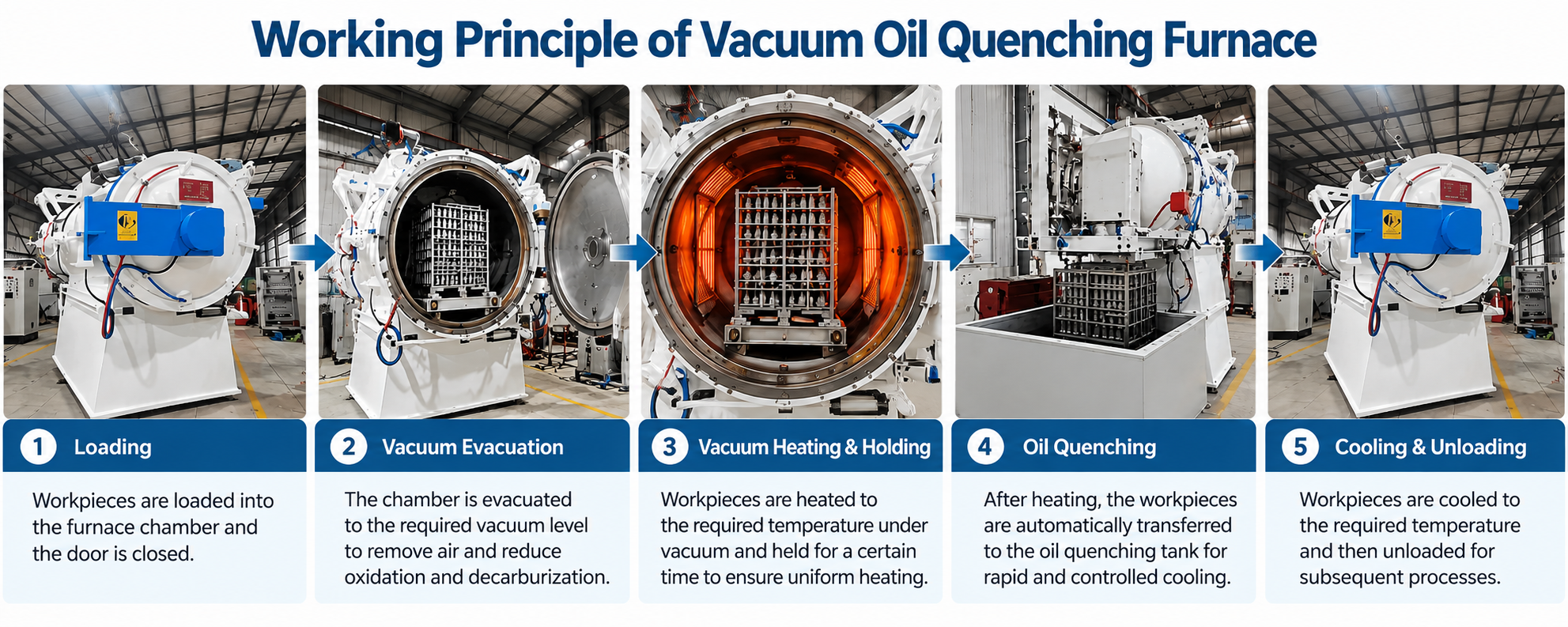
Working Principle of Vacuum Oil Quenching
The vacuum oil quenching process combines controlled vacuum heating with rapid oil cooling for the hardening of metal components. After the workpieces are loaded into the furnace chamber, the chamber is evacuated and the parts are heated according to the required heat treatment program.
During heating and holding, the vacuum environment helps reduce oxidation and decarburization of the workpiece surface. After the required temperature and holding time are reached, the workpieces are transferred to the oil quenching stage for rapid and controlled cooling.
The quenching process helps achieve the required hardness and mechanical properties for materials such as tool steel, die steel, alloy steel and high-speed steel. Heating temperature, holding time, vacuum conditions and quenching parameters are selected according to the material, workpiece dimensions and required heat treatment results.
Heating & Vacuum System
The Industrial Vacuum Oil Quenching Furnace uses a sealed vacuum heating chamber to provide a controlled environment for heating and holding the workpieces before quenching. The vacuum system removes air from the chamber, helping reduce oxidation and decarburization during high-temperature heat treatment.
The heating system is designed to provide uniform and controlled heating throughout the effective working zone. Temperature, heating rate, holding time and vacuum conditions can be programmed according to the material and required heat treatment process.
The vacuum system, heating chamber, heating power and effective working zone can be configured according to the workpiece dimensions, loading capacity and process requirements.
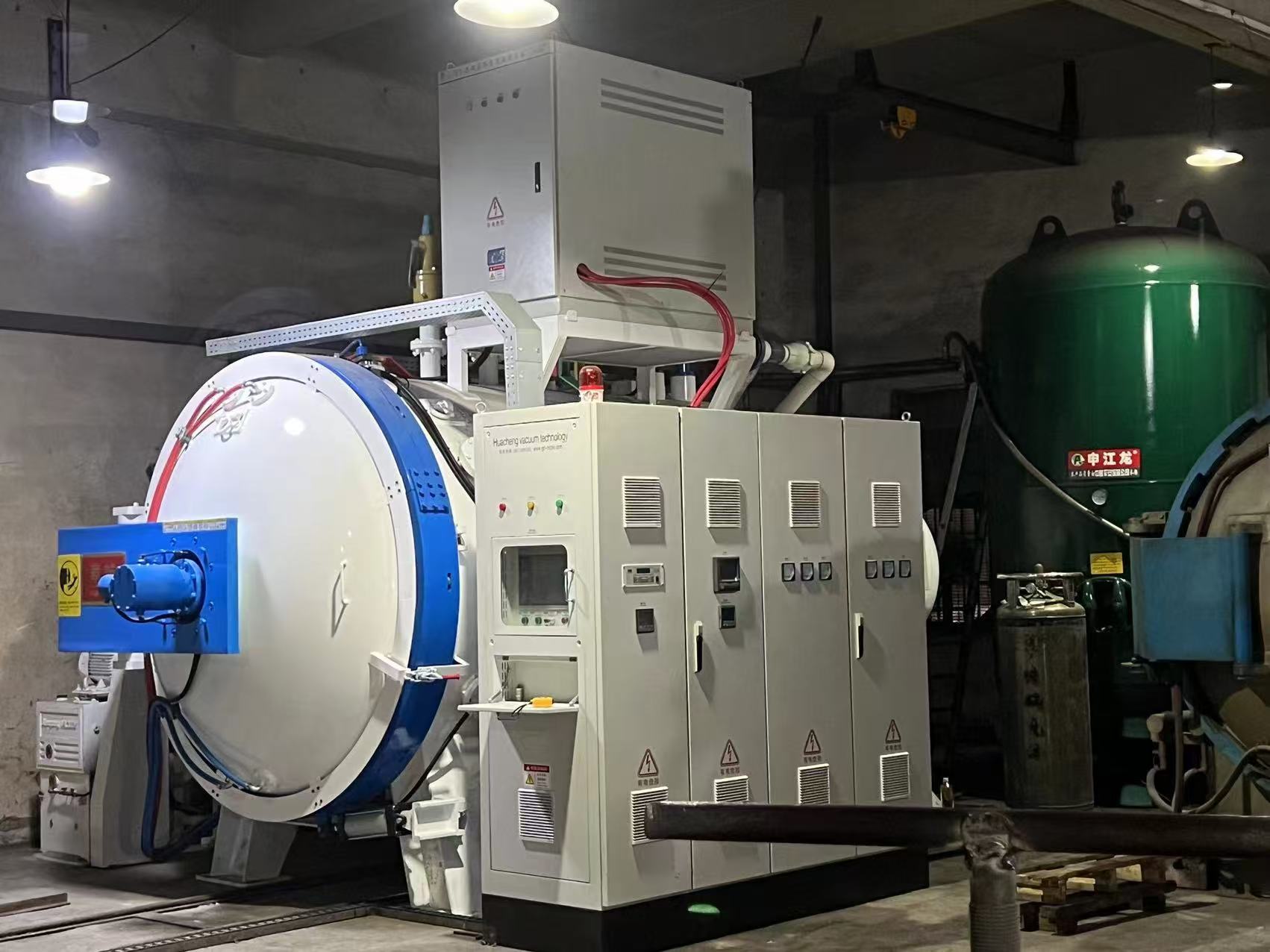
Main Equipment Components
1. Vacuum Heating Chamber
Sealed vacuum chamber with a double-layer water-cooling structure, graphite heat insulation and graphite heating elements for controlled and uniform high-temperature heating.
2. Vacuum Pumping System
Vacuum pumping system configured with a rotary vane mechanical pump and molecular pump to provide the vacuum conditions required for the heat treatment process.
3. Oil Quenching System
Quenching oil system with oil storage, circulation and agitation functions to provide rapid and controlled cooling of the workpieces after vacuum heating. An external oil-water heat exchanger helps control the quenching oil temperature during operation.
4. Workpiece Transfer & Lifting System
Transfer and lifting mechanism designed to move the workpieces between the heating and oil quenching stages smoothly and reliably. The mechanism can be configured according to furnace structure, loading capacity and process requirements.
5. PLC & HMI Control System
Automatic control system for heating, temperature holding, vacuum operation, oil quenching and process monitoring. Heat treatment programs and process parameters can be set according to different materials and workpieces.
6. Safety & Interlock System
The furnace incorporates process monitoring, alarm and interlock functions for temperature, vacuum and equipment operation. Specific safety configurations are determined according to the final furnace design and project requirements.
Oil Quenching System & Key Advantages
The oil quenching system provides rapid and controlled cooling after vacuum heating to achieve the required hardness and mechanical properties of the workpiece.
Key advantages include:
1. Reduced Oxidation & Decarburization
Vacuum heating helps reduce oxidation and decarburization during high-temperature treatment, supporting a cleaner workpiece surface and reducing subsequent surface processing requirements.
2. Rapid Oil Quenching
Oil quenching provides a relatively high cooling rate suitable for hardening tool steel, die steel, alloy steel and other applicable materials.
3. Controlled Oil Circulation
Oil circulation and agitation help improve cooling consistency around the furnace load. The oil temperature can be controlled through the cooling and heat-exchange system.
4. Controlled Heat Treatment Process
Heating, holding, vacuum operation and quenching parameters can be managed through the control system according to different material and process requirements.
5. Flexible Process Configuration
Furnace size, loading capacity, vacuum system, heating system and oil quenching configuration can be customized according to the workpiece and production requirements.
Applications & Materials
The Industrial Vacuum Oil Quenching Furnace is suitable for hardening metal components that require controlled heating, rapid oil cooling, high hardness and reduced surface oxidation.
Typical materials and applications include:
1. Tool Steel & Die Steel
Molds, dies, punches, forming tools and other tooling components requiring hardening after high-temperature heating.
2. High-Speed Steel
Cutting tools and selected tooling components requiring controlled vacuum heat treatment and quenching.
3. Alloy Steel
Gears, shafts, transmission components and other mechanical parts requiring improved hardness and wear resistance.
4. Bearing Steel
Bearing rings and other applicable bearing components requiring controlled hardening and oil quenching.
5. Precision Mechanical Components
Selected machine parts and precision metal components where surface oxidation, distortion and heat treatment consistency need to be controlled.
The suitability of vacuum oil quenching depends on the material grade, workpiece geometry, required hardness and heat treatment process. Rexin engineers can recommend the appropriate furnace configuration after reviewing the workpiece and process requirements.
Technical Specifications
The following specifications are reference configurations for the Industrial Vacuum Oil Quenching Furnace. Final technical parameters are determined according to the workpiece, loading capacity and heat treatment process.
| Item | Reference Specification |
|---|---|
| Effective Heating Chamber Size | 600 × 800 × 1000 mm / 800 × 1200 × 1500 mm, or customized |
| Maximum Working Temperature | 1300°C |
| Ultimate Vacuum | ≤ 6.7 × 10⁻³ Pa |
| Temperature Uniformity | ±5°C |
| Quenching Medium | Vacuum quenching oil |
| Heating Element | Graphite heating elements |
| Vacuum System | Rotary vane mechanical pump + molecular pump |
| Control System | PLC + Touch Screen HMI |
| Cooling System | Double-layer water cooling + forced oil circulation |
| Reference Loading Capacity | 200 kg / 500 kg / 1000 kg, depending on configuration |
| Power Supply | 380 V / 50 Hz, customizable for local power standards |
Chamber dimensions, loading capacity, heating power, vacuum configuration, cooling system and electrical specifications can be customized according to the customer's production requirements.
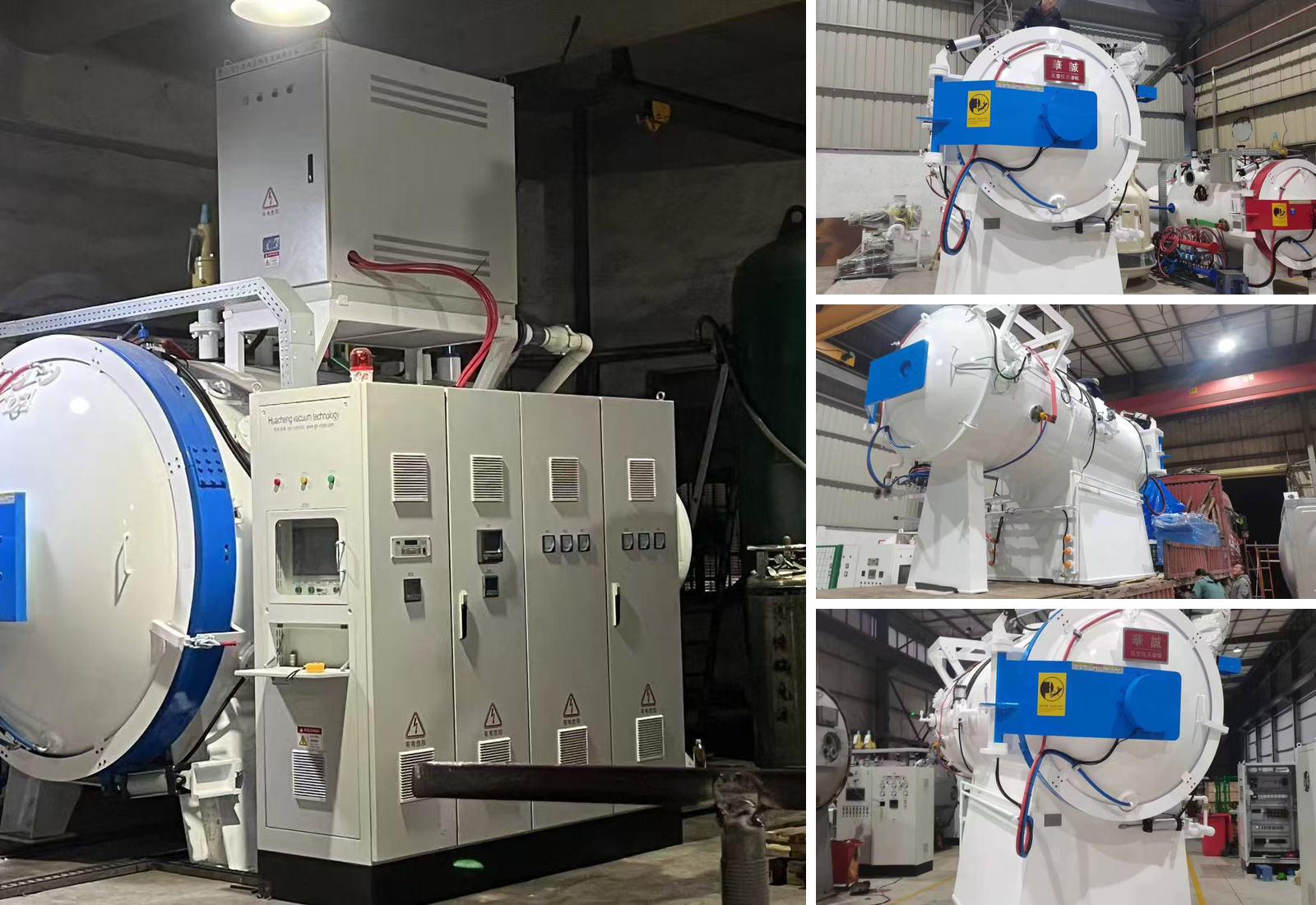
Industrial Vacuum Oil Quenching Furnace – Equipment Showcase
Why Choose Rexin
Engineering That Connects Process, Equipment and Production
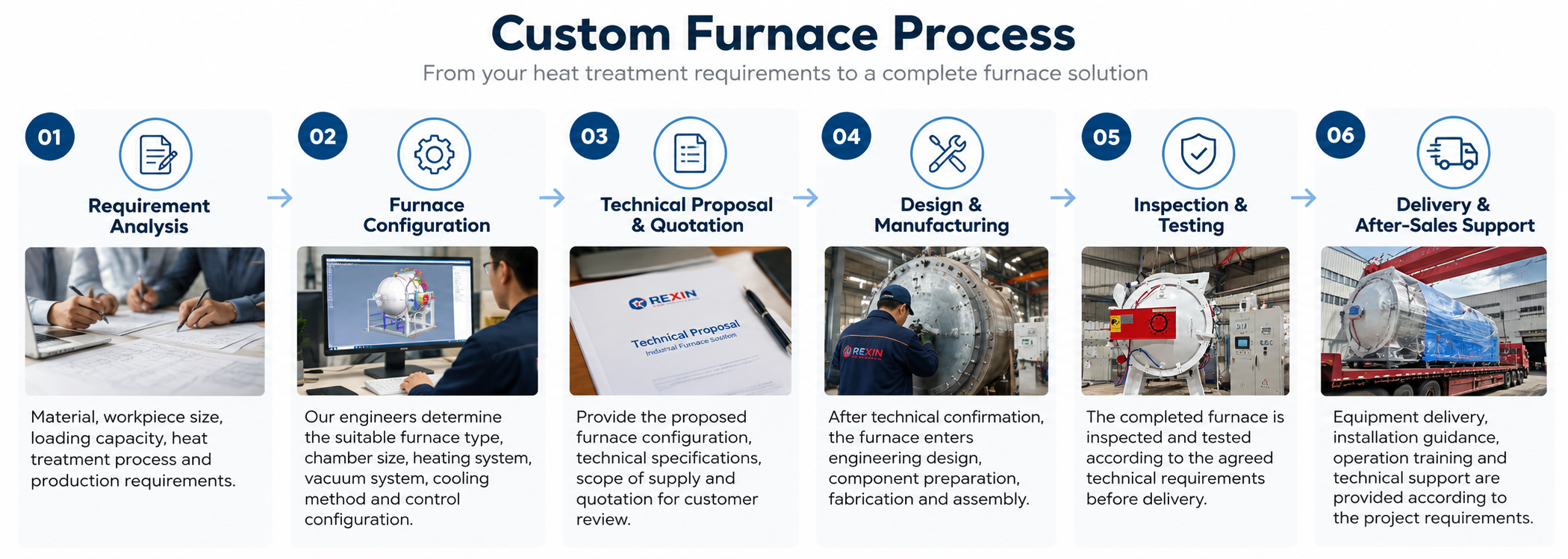
Rexin provides industrial furnace solutions from process evaluation and furnace design to manufacturing, delivery and after-sales support.
18+ Years Experience
Professional experience in industrial furnace and heat treatment equipment manufacturing.
Customized Furnace Solutions
Furnace size, heating system, atmosphere or vacuum system, control configuration and production capacity can be customized according to different heat treatment requirements.
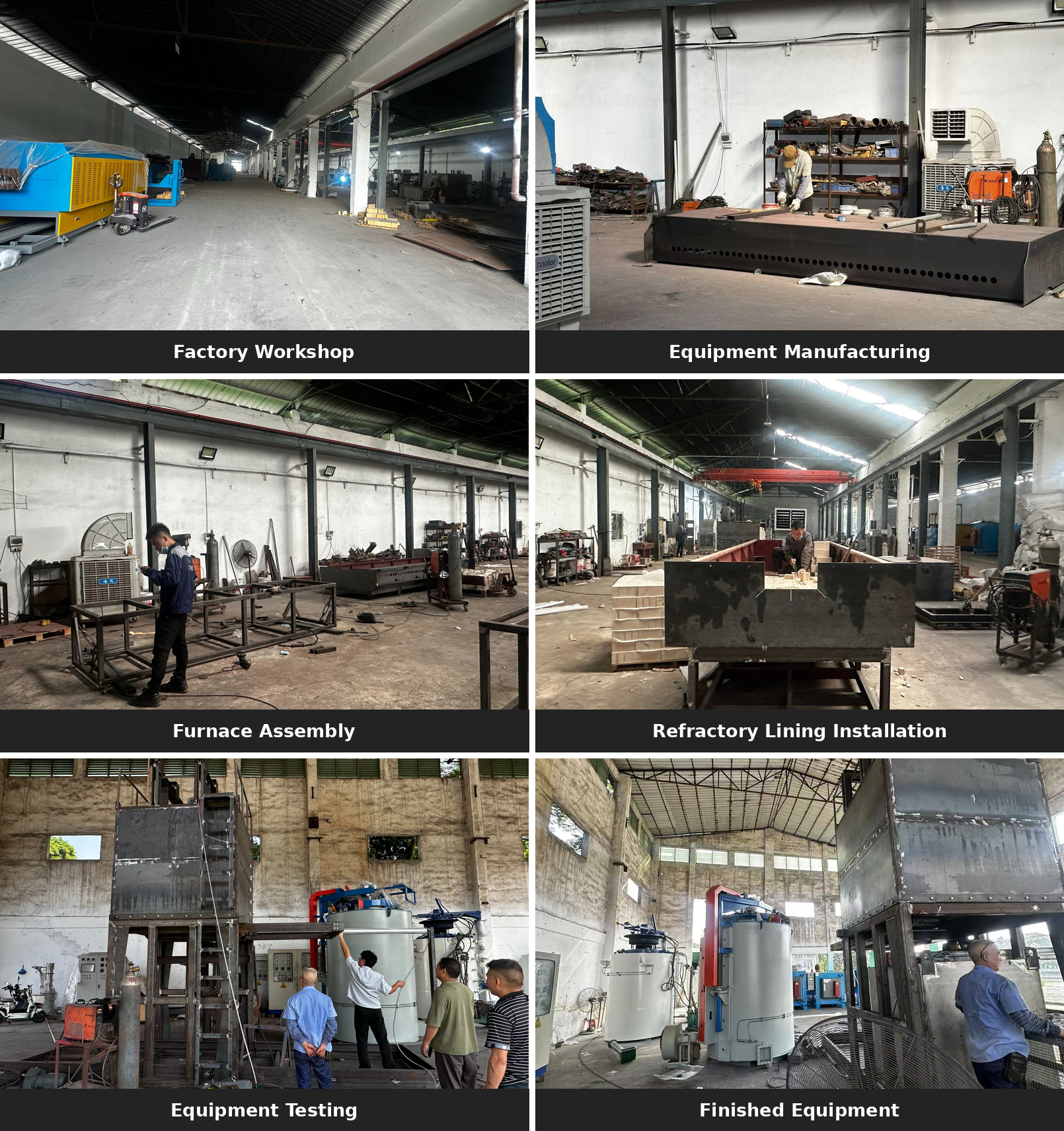
Manufacturing & Quality Control
Equipment is manufactured and assembled in our factory with inspection and testing before delivery.
Technical & After-Sales Support
From requirement review and technical proposal to manufacturing, delivery, installation guidance, training and after-sales support.
Custom Furnace Process
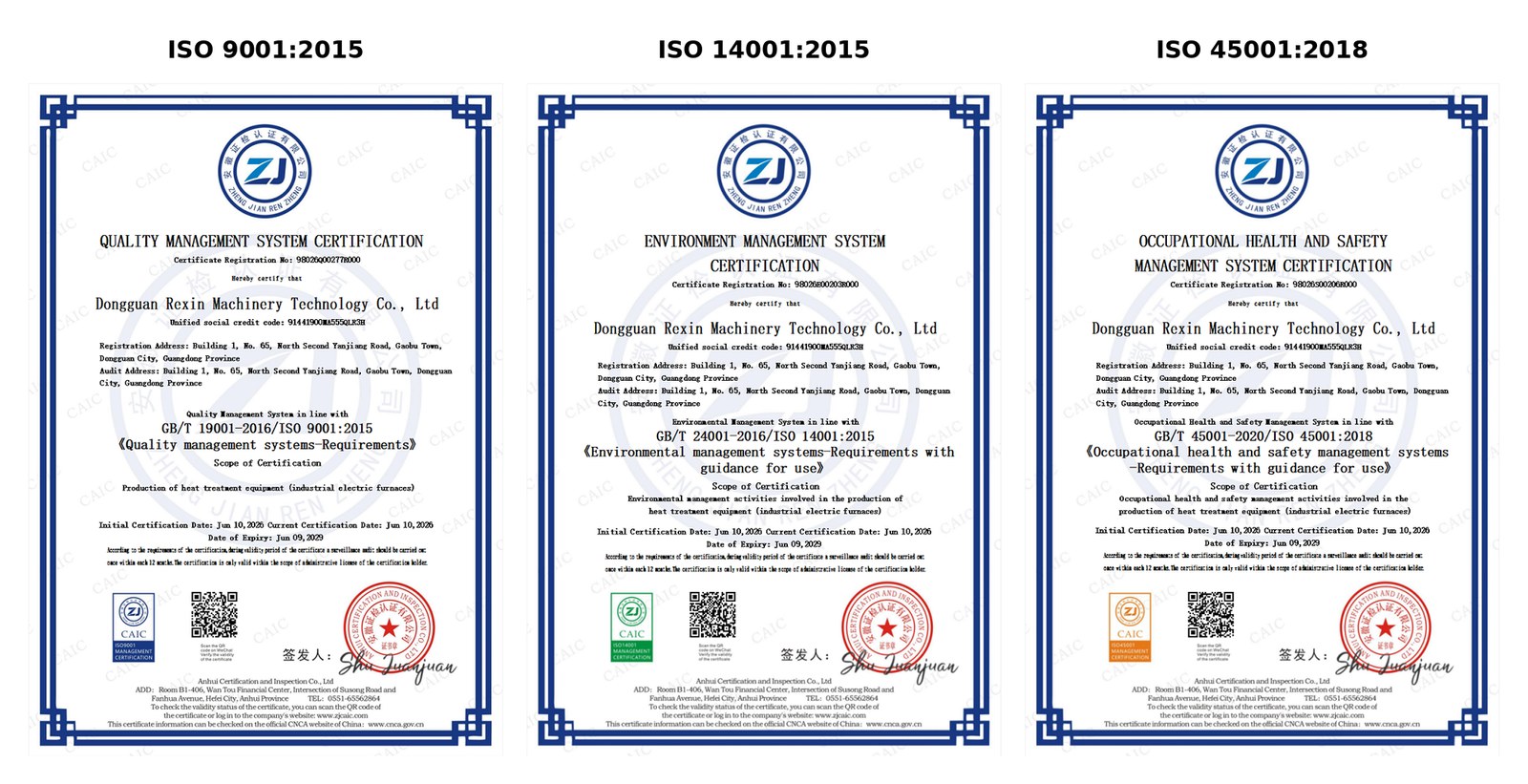
Certificates & Quality Assurance
Rexin is committed to quality control throughout furnace design, manufacturing, assembly and testing. Our certifications and quality management practices support reliable industrial furnace manufacturing and consistent equipment quality.
Each furnace is inspected and tested before delivery according to the agreed technical requirements.
Frequently Asked Questions
Q1: What materials can be treated in a vacuum oil quenching furnace?
Vacuum oil quenching is commonly used for tool steel, die steel, alloy steel, high-speed steel, bearing steel and other materials suitable for oil hardening. The appropriate process depends on the material grade, workpiece dimensions and required hardness.
Q2: What are the advantages of vacuum oil quenching?
Vacuum heating helps reduce oxidation and decarburization during high-temperature treatment, while oil quenching provides rapid cooling for hardening. This combination is suitable for components requiring controlled heat treatment, high hardness and a cleaner surface finish.
Q3: What is the maximum working temperature?
The reference maximum working temperature of this Industrial Vacuum Oil Quenching Furnace is 1300°C. The actual operating temperature is selected according to the material and heat treatment process.
Q4: Can the furnace size and loading capacity be customized?
Yes. The heating chamber dimensions, loading capacity, heating system, vacuum system, oil quenching system, control system and electrical configuration can be customized according to the workpiece and production requirements.
Q5: What information should I provide for furnace selection?
Please provide the material grade, workpiece dimensions, maximum loading weight, required heating and quenching process, production capacity and any special heat treatment requirements.
Q6: Can Rexin provide a technical proposal and quotation?
Yes. Rexin engineers can recommend a suitable furnace configuration and prepare a technical proposal and quotation based on your workpiece and heat treatment requirements.
RELATED PRODUCTS
If you’re interested in our heat treatment furnaces or customized solutions, contact us for professional support and tailored quotations. We look forward to long-term win-win cooperation.