Products
About Us

Technical Support

Jul. 29, 2026
Share:1. Introduction: What Is a Vacuum Furnace?
A vacuum furnace is a closed industrial heat treatment system that removes air and oxygen from the sealed furnace chamber to perform heating, quenching, tempering, brazing, sintering, annealing and other precision manufacturing procedures under oxygen-free or controlled atmosphere conditions. As the core equipment of modern high-end precision manufacturing, vacuum heat treatment completely solves the common defects of traditional atmospheric furnaces, including surface oxidation, decarburization, color discoloration and residual stress instability of metal workpieces.
Covering full-scene production from small benchtop vacuum furnace laboratory testing to large continuous vacuum furnace mass production, vacuum furnace systems are widely applied in aerospace, automotive, powder metallurgy, precision tooling, medical hardware and new energy industries. For global industrial buyers searching for vacuum furnace for sale or accurate vacuum furnace price, matching the correct furnace type, technical parameters and process scenarios before procurement is the key to avoiding equipment mismatch and production loss.
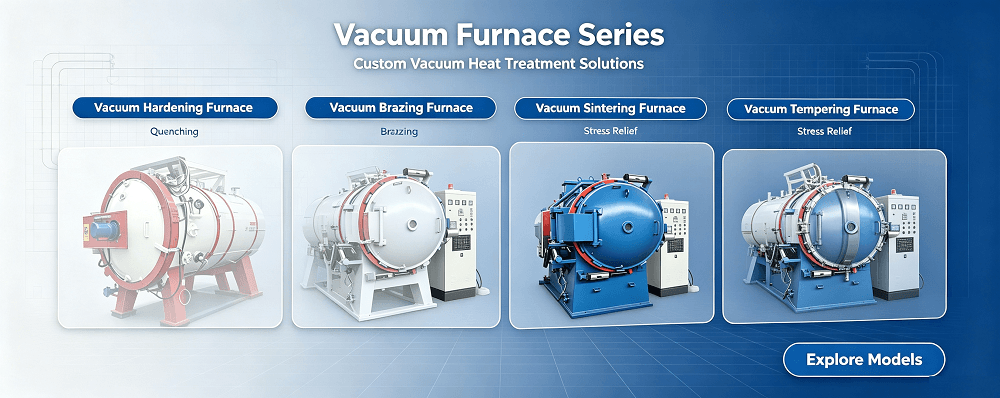
2. Core Advantages of Vacuum Heat Treatment Furnace
Different from traditional atmospheric furnaces, professional industrial vacuum furnaces provide irreplaceable technical and economic benefits for high-precision metal processing and high-standard industrial manufacturing, which are the core reasons why vacuum heat treatment has gradually replaced traditional thermal processing technology:
Zero Oxidation & Zero Decarburization: The fully closed vacuum isolation environment completely avoids metal surface oxidation and decarburization. Workpieces maintain a mirror-bright metallic surface without pickling, polishing or secondary cleaning, greatly reducing post-processing labor and time costs.
High Metallurgical Consistency: Intelligent constant temperature control and stable vacuum environment ensure uniform hardness, stable dimensional accuracy and repeatable mechanical properties for batch workpieces, effectively reducing product scrap rate.
Multi-Process Integration: One single vacuum furnace supports multiple precision processes including vacuum hardening, vacuum quenching, vacuum tempering, vacuum annealing, vacuum brazing, vacuum sintering, vacuum carburizing and nitriding, realizing multi-purpose equipment and saving factory layout cost.
Energy Saving & Eco-Friendly Safety: Closed heating design without open flame, low gas consumption and zero waste gas emission, fully compliant with EU industrial environmental protection and global factory safety standards.
Customizable Atmosphere Processing: Support nitrogen, hydrogen and argon filling to form a professionalvacuum atmosphere furnace and hydrogen vacuum furnace, meeting the processing requirements of active metals and special alloy materials.
Ultra-High Processing Precision: The temperature deviation of high-end models is controlled within ±2℃~±3℃, perfectly meeting the ultra-precision tolerance standards of aerospace and medical parts.
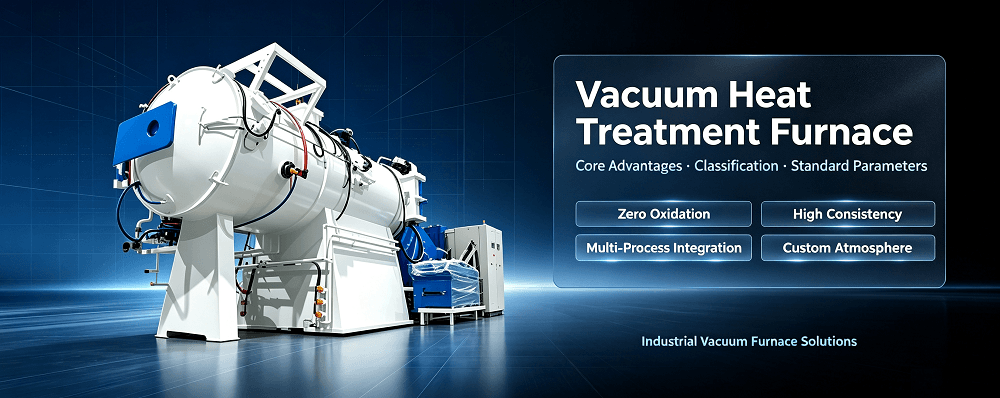
3. Full Classification, Standard Parameters & Industrial Comparison of Vacuum Furnaces
As professional vacuum furnace manufacturers, we customize diversified vacuum furnace models according to structural design, chamber type, processing function and production mode. Each equipment corresponds to exclusive technical parameters, load capacity and industrial scenarios. Below is the complete industrial-grade parameter specification and horizontal comparison for buyer procurement reference.
3.1 Mainstream Vacuum Furnace Technical Parameters (Standard Industrial Grade)
|
Furnace Type |
Max Temperature |
Ultimate Vacuum |
Temperature Uniformity |
Max Load |
Core Application |
| Vacuum Chamber Furnace (Box/Muffle) | 1300℃ | 5×10⁻³ Pa | ±3℃ ~ ±5℃ | 500–1200kg | Mold steel hardening, general industrial heat treatment |
|
Vacuum Tube Furnace |
1200℃ |
1×10⁻³ Pa |
±2℃ |
1–5kg (small batch) |
Laboratory testing, new material R&D, small sample trial production |
|
Vacuum Brazing Furnace (High Temperature & Aluminum) |
1300℃ |
5×10⁻³ Pa |
±3℃ |
300–800kg |
Aluminum alloy & stainless steel flux-free precision brazing |
|
Vacuum Sintering Furnace (With Dewaxing Function) |
1250℃ |
High vacuum |
±4℃ |
800–1500kg |
Powder metallurgy parts densification, integrated dewaxing & sintering |
|
Vacuum Tempering Furnace |
800℃ |
1×10⁻² Pa |
±3℃ |
1000kg |
Workpiece stress relief, bright tempering treatment |
|
High Vacuum Furnace |
1300℃ |
1×10⁻³ Pa |
±2℃ |
200–500kg |
Medical implants, aerospace ultra-precision parts processing |
|
Vacuum Gas Quenching Furnace |
1250℃ |
5×10⁻³ Pa |
±3℃ |
500–1000kg |
High-precision thin-walled parts, low-deformation quenching |
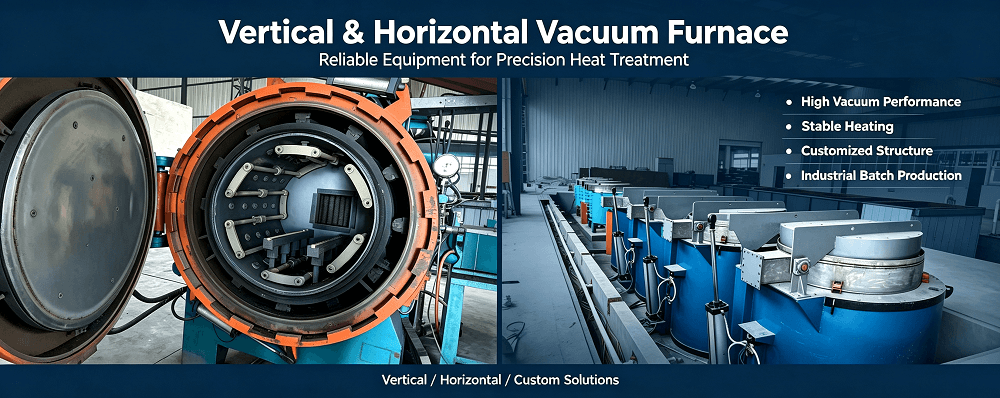
3.2 Structural Classification: Vertical & Horizontal Vacuum Furnace
Vertical vacuum furnace features vertical chamber layout, small floor space and excellent vacuum tightness. It is specially suitable for long shaft parts, tool bits and small precision parts, widely used in precision mold vacuum quenching, annealing and brazing processes.
Horizontal vacuum furnace adopts horizontal open structural design, realizing convenient large-scale workpiece loading and unloading. It supports super-large and heavy workpieces, and is the preferred equipment for industrial batch production and automated assembly line matching.
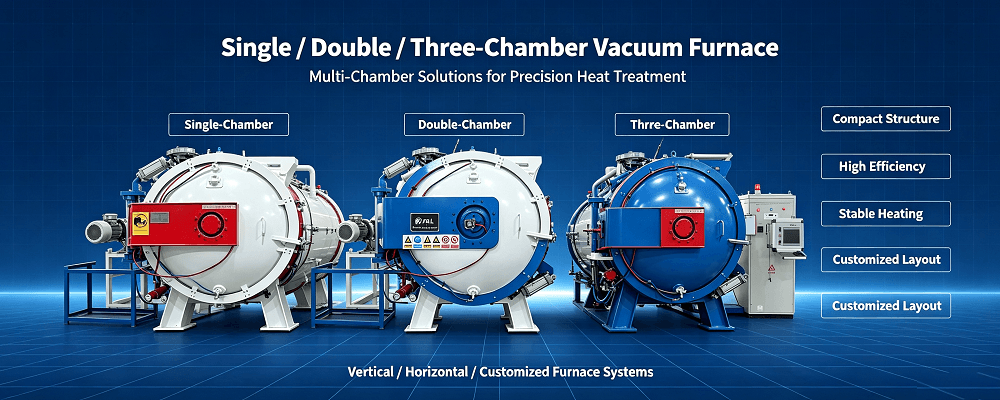
3.3 Chamber Structure Classification: Single / Double / Three-Chamber Furnace
Single room true air quenching furnace: Integrated heating and quenching chamber, simple structure and cost-effective, ideal for small-batch, multi-variety processing, mainstream equipment for small and medium processing enterprises.
Double chamber gas quenching furnace: Separated heating and quenching chambers, effectively improving processing efficiency, with stable and uniform gas quenching effect, suitable for high-hardness tool steel and alloy structural parts.
Double chamber vacuum oil quenching air cooling furnace: Supports dual switching of oil quenching and air cooling processes, flexible adaptation to workpieces with different hardness requirements, strong process compatibility.
Three-chamber vacuum oil quenching water quenching furnace: Three-station separated structure of feeding, heating and quenching, realizing assembly line operation, ultra-high efficiency for large-scale standardized mass production.
3.4 Production Mode Comparison: Batch vs Continuous Vacuum Furnace
|
Comparison Item |
Batch Vacuum Furnace (Horizontal/Vertical) |
Continuous Vacuum Furnace |
| Production Mode | Intermittent batch processing | 24h uninterrupted automatic production |
|
Applicable Output |
Small & medium batch, flexible order switching |
Large-volume fixed product mass production |
|
Equipment Cost |
Lower initial investment, high cost performance |
Higher initial investment, lower unit production cost |
|
Process Flexibility |
Strong, support multiple processes & diverse workpieces |
Single stable process, fixed production line configuration |
|
Best Applicable Scenarios |
Tooling factory, job shop, product trial production |
Automotive parts, fastener, powder metallurgy mass production factories |
4. Vacuum Heat Treatment Processes & Real Industrial Application Cases
Each vacuum thermal processing technology corresponds to mature and standardized industrial scenarios. Below are verified real overseas and domestic application cases, helping global buyers quickly match professional equipment according to their own processing needs.
4.1 Vacuum Hardening & Vacuum Gas Quenching
Process Features: Effectively improve workpiece hardness, wear resistance and structural strength; vacuum gas quenching avoids deformation and cracking defects caused by traditional water quenching, ensuring bright and oxide-free workpiece surface.
Real Application Case: A German professional mold processing factory adopts our vacuum hardening furnace for H13, SKD11 and DC53 die steel thermal processing. After vacuum quenching treatment, the mold surface is completely oxide-free and polishing-free, the hardness uniformity reaches ±1.5HRC, and the product scrap rate is reduced from 8% to below 1%. The enterprise saves 20% of annual post-processing labor costs and greatly improves product market competitiveness.
4.2 Vacuum Tempering
Process Features: Completely eliminate internal quenching stress, stabilize workpiece dimensional accuracy, prevent workpiece cracking and deformation, and achieve mirror bright tempering effect without surface discoloration.
Real Application Case: A large automotive parts manufacturer uses our vacuum tempering furnace for gear and synchronizer hub stress relief treatment. Compared with traditional box furnaces, vacuum tempering eliminates all surface discoloration problems, realizes zero color difference defective products, and fully meets the high-standard delivery requirements of automotive core components.
4.3 Vacuum Annealing
Process Features: Soften metal materials, improve material ductility and toughness, and release residual stress generated by rolling and machining, suitable for precision metal parts finishing.
Real Application Case: A professional stainless steel pipe factory applies our vacuum annealing furnace for thin-walled stainless steel tube bright annealing. The pure vacuum processing environment avoids oxidation and tube wall mottling, realizes one-time forming without pickling treatment, greatly improves product surface finish and production efficiency.
4.4 Vacuum Brazing (Aluminum & High-Temperature Brazing)
Process Features: Flux-free high-precision welding, clean and seamless welding seam, high structural bonding strength, no corrosion residue, suitable for high-end precision component connection.
Real Application Case: A new energy heat exchanger manufacturer adopts our aluminium brazing vacuum furnace for aluminum plate and tube brazing processing. The vacuum brazing process completely avoids flux corrosion and residual dirt in traditional welding, improves product durability and stability, and passes strict new energy industry quality certification.
4.5 Vacuum Sintering & Dewaxing
Process Features: Densify metal powder compacts, improve product density and mechanical properties, integrate dewaxing and sintering processes, and is the core supporting equipment for the powder metallurgy industry.
Real Application Case: A Southeast Asian powder metallurgy factory uses our vacuum sintering dewaxing furnace for automotive PM gear batch production. The vacuum-hydrogen mixed atmosphere effectively prevents carbon oxidation, ensures uniform product density, and supports 24-hour uninterrupted continuous production, increasing production efficiency by 30% compared with traditional equipment.
4.6 Vacuum Carburizing & Nitriding
Process Features: Precisely strengthen the surface hardness and wear resistance of mechanical parts, accurately control the depth of carburizing and nitriding layer, and improve the fatigue resistance of high-load components.
Application Scenario: Widely used in automotive transmission parts, engine components, engineering machinery high-load parts and other high-end mechanical manufacturing fields.
4.7 Ultra-Low Temperature Deep Cold Treatment
Our ultra low temperature furnace supports ultra-deep cold treatment of workpieces, completely eliminates material residual stress after heat treatment, greatly improves workpiece dimensional stability and service life, and is widely matched with high-precision mold and aerospace parts processing lines.
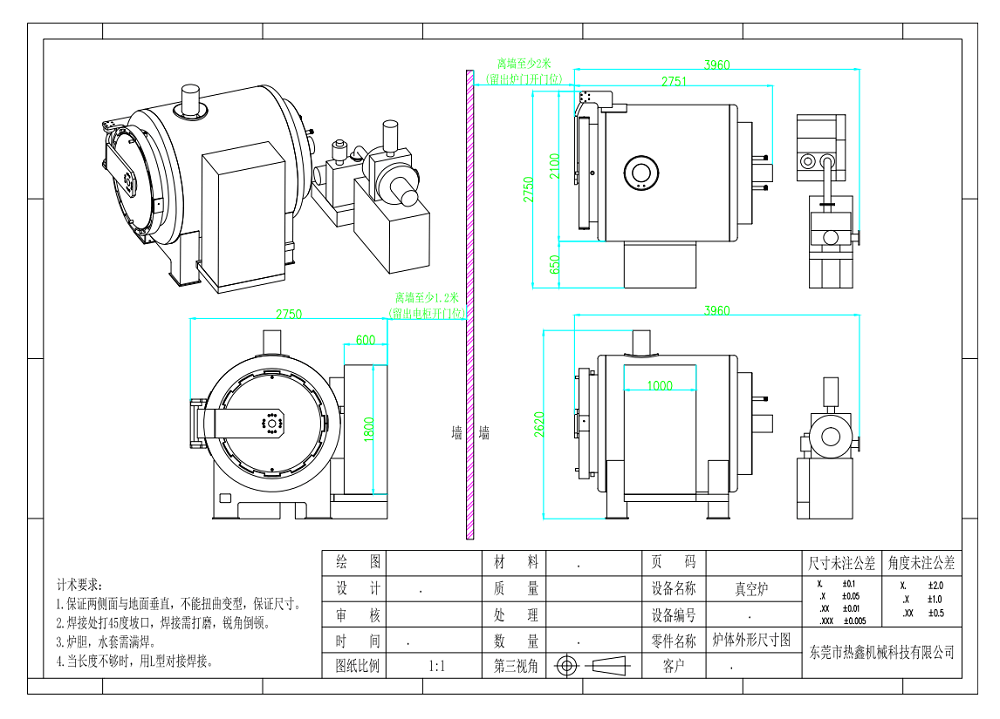
Vacuum Furnace Engineering Drawing Design
5. Vacuum Furnace Scenario Matching Guide: Benchtop / Small / Medium / Large
Different equipment sizes and configurations correspond to completely different application scenarios. We summarize a targeted matching guide to help buyers quickly select equipment according to production scale:
Benchtop vacuum furnace / Small vacuum furnace: Compact structure, low power consumption and easy operation. Perfect for university laboratories, scientific research institutions, new material testing and small-batch product trial production.
Medium industrial vacuum furnace: Standard batch production model with balanced performance and price. The most cost-effective choice for tooling factories, hardware heat treatment workshops and small and medium processing enterprises.
Large vacuum furnace / Continuous vacuum furnace: Super-large hearth and ultra-high load capacity, supporting customized non-standard size. Specially designed for large factories with stable high-volume orders and automated production lines.
6. Professional Vacuum Furnace Buying Guide & Procurement Avoidance Tips
When global buyers search for vacuum furnace manufacturers, vacuum furnace price or vacuum furnace for sale, most of them will face equipment mismatch, parameter mismatching and over-budget problems. We summarize core procurement indicators to help you avoid economic losses:
Confirm Core Process Requirements: Clarify the required processes (hardening, tempering, annealing, brazing, sintering, carburizing) first, and select dedicated furnace models to avoid multi-functional equipment with low efficiency.
Match Reasonable Vacuum Degree: Ordinary industrial heat treatment adopts medium vacuum configuration; medical implants, aerospace ultra-precision parts must be equipped with high vacuum furnace to achieve zero contamination processing.
Focus on Temperature Uniformity: Temperature uniformity directly determines batch product qualification rate, which is the core technical index of a high-quality vacuum heat treat furnace.
Select Reasonable Heating Zone Material: Graphite heating zone for high-temperature heavy-duty industrial production; full stainless steel heating zone for ultra-clean precision component processing.
Verify Manufacturer Service Capacity: Choose formal vacuum heat treatment furnace manufacturers that support non-standard customization, on-site commissioning, personnel training and long-term after-sales maintenance.
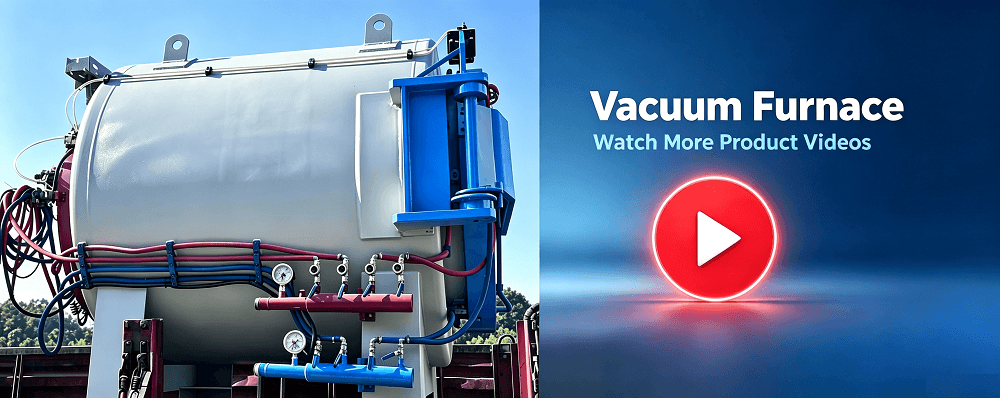
7. Vacuum Furnace Price Influencing Factors
The vacuum furnace price and vacuum heat treatment furnace price are not fixed, mainly affected by equipment size, chamber structure, functional configuration, vacuum degree, temperature grade and automation level. Factory direct sales can effectively avoid middleman markup, providing customers with transparent and cost-effective quotations.
Key Price Factors:
Equipment specification: Benchtop small furnaces have low investment; large industrial and continuous furnaces have higher configuration and higher overall cost
Chamber structure: Multi-chamber automated equipment is more expensive than single-chamber ordinary models, with higher production efficiency
Custom functions: Hydrogen atmosphere, ultra-low temperature, high-precision gas quenching and other customized functions will adjust the total price
Automation degree: Fully intelligent automatic models save long-term labor costs, suitable for large-scale mass production
We have sufficient vacuum furnace for sale and vacuum brazing furnace for sale in stock, supporting fast delivery and global door-to-door transportation.
8. FAQ About Vacuum Furnace & Vacuum Heat Treatment
Q1: What is the difference between vacuum tube furnace and vacuum chamber furnace?
Vacuum tubular furnace is small-sized, mainly used for laboratory small sample testing and new material R&D trial production. Vacuum chamber furnace (muffle furnace) has large load capacity and stable performance, specially suitable for industrial batch heat treatment mass production.
Q2: Can one vacuum furnace complete multiple heat treatment processes?
Standard single-chamber vacuum furnaces can switch annealing, hardening and tempering processes through program adjustment. For large-scale professional production, dedicated brazing or sintering furnaces are recommended to ensure higher production efficiency and processing stability.
Q3: Why is vacuum heat treatment more expensive than traditional heat treatment?
Vacuum furnace adopts high-precision sealing structure and professional vacuum system, with higher manufacturing cost. However, it greatly reduces product scrap rate, cancels post-polishing procedures and lowers long-term maintenance costs, making it the most cost-effective solution for high-end precision manufacturing.
Q4: What industries need high vacuum furnace equipment?
Medical implant parts, aerospace alloy components, electronic precision parts and ultra-bright stainless steel products require high vacuum environment to achieve zero oxidation and zero contamination processing standards.
Q5: Is industrial vacuum furnace easy to maintain?
Our industrial vacuum furnaces adopt modular detachable design for heating components and vacuum systems. Daily maintenance is simple with low failure rate and long service life, effectively reducing enterprise long-term operating costs.
9. Why Choose Our Factory as Your Vacuum Furnace Supplier
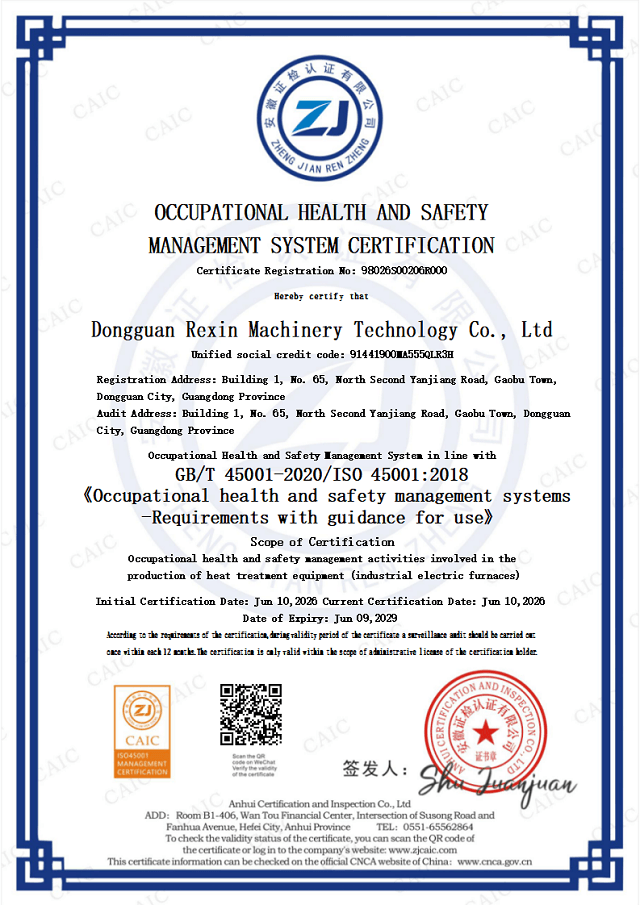
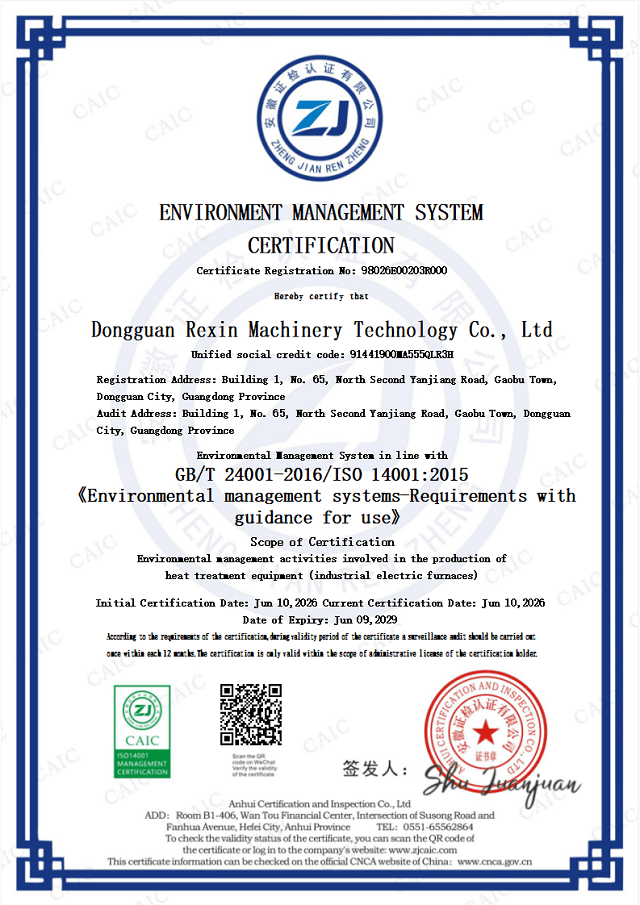
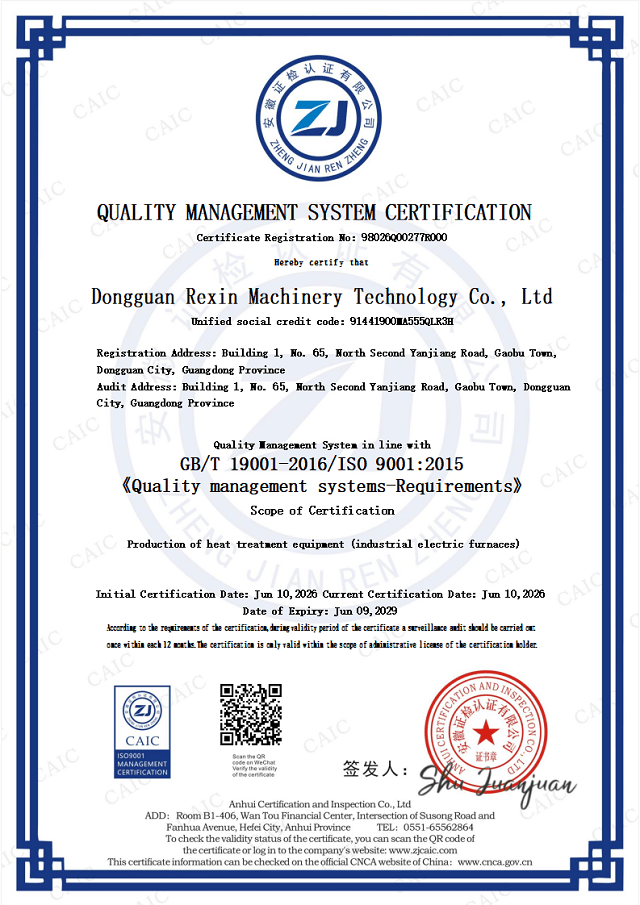
As a professional vacuum furnace manufacturer with 18+ years of R&D and production experience, we focus on full-series vacuum thermal treatment equipment R&D, customization and production, serving global industrial manufacturing clients. All products pass CE, ISO international industrial certification, compliant with global safety and environmental protection standards.
Full Product Coverage: Complete furnace series including annealing, hardening, tempering, brazing, sintering, carburizing and nitriding equipment
Free Customized Solution: Provide non-standard size, function and automation scheme customization according to client production demands
Factory Direct Price: No middleman markup, transparent vacuum furnace price, high cost performance
Strict Quality Inspection: Each equipment undergoes vacuum tightness, temperature uniformity and continuous operation tests before delivery
Global After-Sales Service: Overseas installation guidance, operation training and lifetime technical support
Fast Spot Delivery: Sufficient spot inventory of standard equipment to meet urgent production orders
Our Certification
10. Get Custom Vacuum Furnace Quotation & Solution
Whether you need standard vacuum furnace spot goods, non-standard customized equipment or overall vacuum heat treatment production solutions, we provide one-stop professional services. Our professional engineering team will match the most cost-effective equipment according to your processing materials, workpiece size, daily output and budget, and provide free parameter scheme design and detailed factory quotation.
Contact us today to get your exclusive vacuum furnace solution and latest factory-direct price!
If you’re interested in our heat treatment furnaces or customized solutions, contact us for professional support and tailored quotations. We look forward to long-term win-win cooperation.