Products
About Us

Technical Support

Aug. 22, 2026
Share:
1. Introduction to Sintering Furnace & Sintering Oven
A sintering furnace is core industrial thermal processing equipment designed for powder metallurgy, metal component densification, and high-temperature material forming. Often referred to as a sintering oven in laboratory and small-scale production scenarios, this equipment bonds metal powder particles through controlled high temperature, specific atmosphere protection, and precise thermal cycles, eliminating porosity and enhancing mechanical strength, hardness, and structural stability of finished parts.
For Russian manufacturing enterprises focusing on automotive parts, hardware components, powder metallurgy products, and precision metal processing, a reliable industrial sintering furnace is essential for stable mass production. Choosing a matched metal sintering furnace directly determines product yield, surface quality, and long-term production cost control.
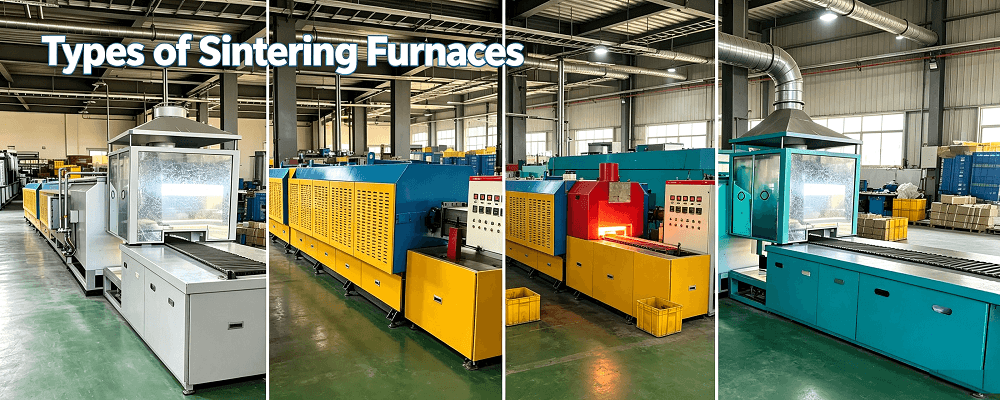
2. Main Types of Industrial Sintering Furnaces (Complete Classification)
Industrial sintering furnaces are classified by working mode, structural design, and atmosphere system. Below are the most widely applied models for Russian industrial production, covering mainstream demands from small-batch customization to large-scale continuous production.
2.1 Vacuum Sintering Furnace
A vacuum sintering furnace operates in a fully sealed vacuum environment, completely isolating air oxidation. It is the preferred equipment for high-precision, high-density metal parts, alloy components, and high-end powder metallurgy products. This furnace features low impurity rate, zero surface oxidation, and uniform internal tissue density, meeting strict quality standards for aerospace, precision machinery, and automotive core components.
Vacuum Sintering Furnace – Technical Parameters
| Max Working Temperature | 1300°C |
|
Vacuum Degree |
≤10Pa |
|
Temperature Uniformity |
±2°C |
|
Control System |
Full-automatic PID precise temperature control |
|
Core Function |
Integrated vacuum degassing and binder removal, low-deformation thermal cycle |
2.2 Continuous Sintering Furnace
The continuous sintering furnace adopts mesh belt conveyor automatic feeding and discharging, supporting 24-hour uninterrupted production. It is specially designed for large-volume standardized metal sintering production. With adjustable running speed, stable temperature uniformity, and energy-saving operation, it is widely used in mass production of ordinary metal powder parts, fasteners, and mechanical accessories, solving the low-efficiency pain point of batch-type furnaces.
Continuous Sintering Furnace – Technical Parameters
| Max Working Temperature | 1150°C |
|
Temperature Zones |
7–8 independent temperature control zones |
|
Temperature Uniformity |
±5°C |
|
Mesh Belt Speed |
0.1–0.5 m/min (adjustable) |
|
Hourly Production Capacity |
100–800kg |
|
Atmosphere System |
Stable hydrogen-nitrogen mixed protective atmosphere |
2.3 High Temperature Sintering Furnace
High temperature sintering furnaces support a maximum working temperature of 1100°C–1200°C, adapting to high-melting-point alloy sintering, special metal densification, and hard material processing. Equipped with high-purity insulation materials and precise PID temperature control systems, it achieves ±1°C temperature accuracy, ensuring consistent sintering effects for high-performance metal materials.
High Temperature Sintering Furnace – Technical Parameters
| Temperature Range | 20°C–1200°C |
|
Temperature Control Accuracy |
±1°C (ultra-precise) |
|
Insulation Material |
High-purity alumina lining |
|
Furnace Body Material |
High-temperature resistant 310S stainless steel |
|
Working Feature |
Support long-term high-load continuous operation |
2.4 Hydrogen Sintering Furnace
A hydrogen sintering furnace uses hydrogen-nitrogen mixed protective atmosphere (matched with ammonia cracker equipment) to realize bright sintering without oxidation. It effectively removes surface oxide layers of metal parts, delivering smooth and bright finished surfaces without secondary polishing. It is ideal for stainless steel parts, copper alloy components, and high-precision hardware products.
Hydrogen Sintering Furnace – Technical Parameters
| Protective Atmosphere | 75% H₂ + 25% N₂ mixed gas (matched with ammonia cracker) |
|
Hydrogen Flow Range |
5–80 Nm³/h (customizable) |
|
Working Temperature Range |
800°C–1100°C |
|
Standard Dew Point |
≤-10°C |
|
Optional Dew Point |
≤-40°C (with external gas purifier) |
|
Sintering Effect |
Zero oxidation, bright surface forming |
2.5 Fast Cooling Sintering Furnace
RBO Fast Cooling Sintering Furnace is a specialized industrial atmosphere sintering equipment optimized for high-precision powder metallurgy mass production. Different from conventional natural cooling sintering furnaces with long cycle times and unstable workpiece performance, the RBO fast cooling sintering furnace is equipped with a professional closed-loop circulating rapid cooling system. It realizes staged, controllable rapid cooling after high-temperature sintering, effectively eliminating internal residual thermal stress, preventing workpiece cracking, deformation, and uneven hardness. This furnace perfectly solves the core pain points of low efficiency and poor batch consistency in traditional sintering processes, making it one of the most popular upgraded sintering solutions for modern metal component manufacturers in Russia.
Adopting an independent air circulation cooling structure and intelligent temperature difference linkage protection system, the RBO fast cooling sintering furnace supports accurate adjustment of cooling speed according to different metal materials (iron-based, copper-based, stainless steel alloy). It matches both continuous mesh belt production lines and batch-type sintering equipment, ensuring consistent mechanical properties, stable dimensional tolerance, and ultra-high finished product qualification rate for sintered parts. It is widely used for high-standard production of automotive precision parts, bearings, gears, and structural alloy components.
RBO Fast Cooling Sintering Furnace – Technical Parameters
| Cooling System Type | Full closed-loop circulating intelligent fast cooling system |
|
Adjustable Cooling Rate |
5–15°C/min (material-customized) |
|
Effective Cooling Range |
1150°C down to 200°C controllable cooling |
|
Temperature Control Precision |
±3°C, staged cooling program automatic switching |
|
Core Protection |
Anti-deformation, anti-crack, temperature difference overload protection |
|
Applicable Production Mode |
Compatible with continuous mesh belt and batch sintering lines |
|
Main Application Materials |
Iron-based, copper-based, stainless steel, high-strength alloy powder parts |
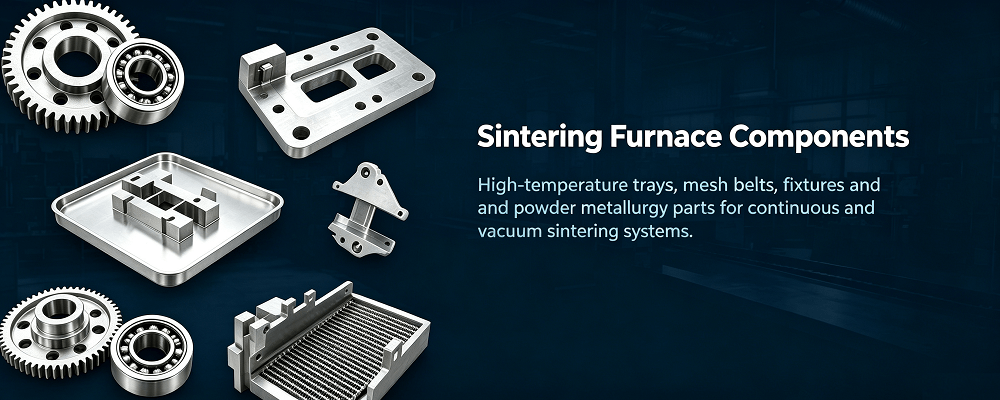
3. Core Applications of Metal Sintering Furnace
Industrial sintering furnaces are highly versatile, serving almost all powder metallurgy and metal processing industries, especially suitable for mainstream production scenarios of Russian manufacturing factories:
Powder metallurgy: Iron-based, copper-based, and stainless steel powder parts sintering
Automotive industry: Brake parts, gear components, and precision automotive accessories
Hardware manufacturing: Fasteners, structural parts, and metal precision components
Aerospace and precision machinery: High-density alloy and high-precision structural parts
New energy industry: Special metal functional parts and conductive components
4. Sintering Furnace Price Factors & Purchasing Guide
Most buyers focus heavily on sintering furnace price and sintering oven for sale resources. The price of industrial sintering equipment is not fixed, mainly affected by the following core factors, helping Russian users select cost-effective equipment and avoid blind purchasing:
Furnace type and structure: Vacuum models are higher-priced than continuous mesh belt models; high-temperature customized equipment is more expensive than standard conventional models
Temperature range and precision: 1200°C high-temperature sintering furnaces with high-precision control systems have higher configuration costs
Atmosphere system: Hydrogen protective atmosphere and vacuum degassing systems increase equipment configuration standards
Production capacity: Large-scale continuous sintering furnaces for mass production are equipped with upgraded transmission and control systems
Customization demand: Non-standard size, fast cooling function, and intelligent remote monitoring will adjust the overall quotation
When searching for a sintering furnace for sale, it is recommended to prioritize professional sintering furnace manufacturers with complete technical capabilities and overseas service experience, rather than simply comparing low prices, to avoid unstable equipment performance and high later maintenance costs.
5. Why Choose Professional Industrial Sintering Furnace Manufacturers
As a professional sintering furnace manufacturer with 18 years of R&D and production experience, we provide full-series sintering equipment covering vacuum, continuous, high-temperature, hydrogen-protected, and fast cooling sintering furnaces, fully adapting to Russian industrial production standards.
All our metal sintering furnaces support personalized non-standard customization, provide 3D drawings and complete technical solutions, and are equipped with independent atmosphere supporting equipment (ammonia cracker units). The equipment features uniform heating, stable operation, energy saving and low consumption, and long service life, with a large number of successful cooperative cases with Russian powder metallurgy factories.
We provide one-stop services including pre-sales technical consultation, scheme design, factory commissioning, operator training, and after-sales long-term technical support, solving all production and equipment operation problems for Russian industrial users.
6. FAQ
6.1 What is the difference between a sintering furnace and a sintering oven?
Sintering ovens are mostly used for laboratory small-batch and low-temperature sintering, with simple structure and small capacity. Industrial sintering furnaces are designed for large-scale industrial production, supporting high temperature, atmosphere protection, and continuous automatic production, with higher stability and production efficiency.
6.2 Is a hydrogen sintering furnace necessary for metal parts production?
For metal parts requiring bright surface and no oxidation, a hydrogen sintering furnace with protective atmosphere is essential. It can effectively improve workpiece finish and eliminate surface oxidation defects, improving product qualification rate.
6.3 How to get an accurate sintering furnace price?
The accurate quotation depends on your required temperature range, production capacity, workpiece material, and functional configuration (vacuum, hydrogen protection, fast cooling). Contact our team to get a customized technical scheme and exclusive quotation.
Conclusion
Industrial sintering furnaces are indispensable core equipment in modern powder metallurgy and metal processing industries. Different types of sintering furnaces (vacuum, continuous, high temperature, hydrogen-protected, fast cooling) meet diversified production demands from laboratory research to large-scale industrial mass production. As a reliable sintering furnace manufacturer, we provide cost-effective sintering furnace for sale and full-process professional services for Russian industrial users, helping enterprises improve production efficiency and product quality.
If you’re interested in our heat treatment furnaces or customized solutions, contact us for professional support and tailored quotations. We look forward to long-term win-win cooperation.